Hackathon · 2026
01 / 04
A calendar that hears the danger.
VIAS is a product for protection against femicide, with the facade of a menstrual calendar. I worked as Product Manager and UX/UI: from public data to the architecture of the solution that took the team to 1st place at the Web Summit Rio 2026 Hackathon.
01 — Problem
Visible help raises the risk.
The starting point was the Dossiê Mulher from ISP-RJ, the state’s public-safety report on violence against women. 56.1% of victims had never filed a report. Nearly two thirds were killed inside their own home.
The aggressor controls the routine and the phone. A call, a panic shortcut, or any app whose category already reveals the intent exposes the victim before it protects her. In this context, the traditional help channel is part of the problem.
Victimization data used in discovery: Dossiê Mulher, ISP-RJ.
02 — Decision
Protection cannot look like protection.
The facade had to be an app that is credible in daily life, useful on its own, with no sign of help on the surface. The bet was a menstrual-cycle calendar. Under it, layers to register contacts and parameters, with as little friction as possible.
The bet
An everyday experience in front. Protection settings in layers that do not announce themselves. Risk classification runs on the device. Only the critical event leaves it, with the location, for Disque Denúncia RJ and the registered support network.
Out of scope
A visible panic button. An app categorized as safety. Continuous audio sent to the cloud. Any of those paths would reveal the intent to the person who must not see it.
03 — Execution
Three layers of the same product.
-
01
Product
The problem was defined by the victimization data. The AI exists for the moment the person cannot act, not as a feature for show.
-
02
Experience
A calendar interface, familiar and private. The protection setup stays hidden. The right experience is the one a phone inspection does not reveal.
-
03
Engineering
Audio processed on the device. The model recognizes critical patterns — a scream, a verbal threat, something breaking. The trigger is silent and sends a structured account of the event with the coordinates.
From sound to trigger.
The app is written in C++ so it stays light enough to process audio on an ordinary phone. The model that listens runs on TensorFlow. Training combined two materials: AudioSet, from Google Research, a public corpus of sound events, and recordings made in FL Studio.
When the pattern is critical, the audio does not leave raw. Whisper transcribes the clip. Phi-3, a small language model, reads that description and interprets what happened. What leaves the device is an account of the event, with the coordinates, not a continuous stream.
The message goes through Zenvia, the messaging intermediary, to Disque Denúncia RJ and the registered network. The channel is silent. The facade stays a calendar.
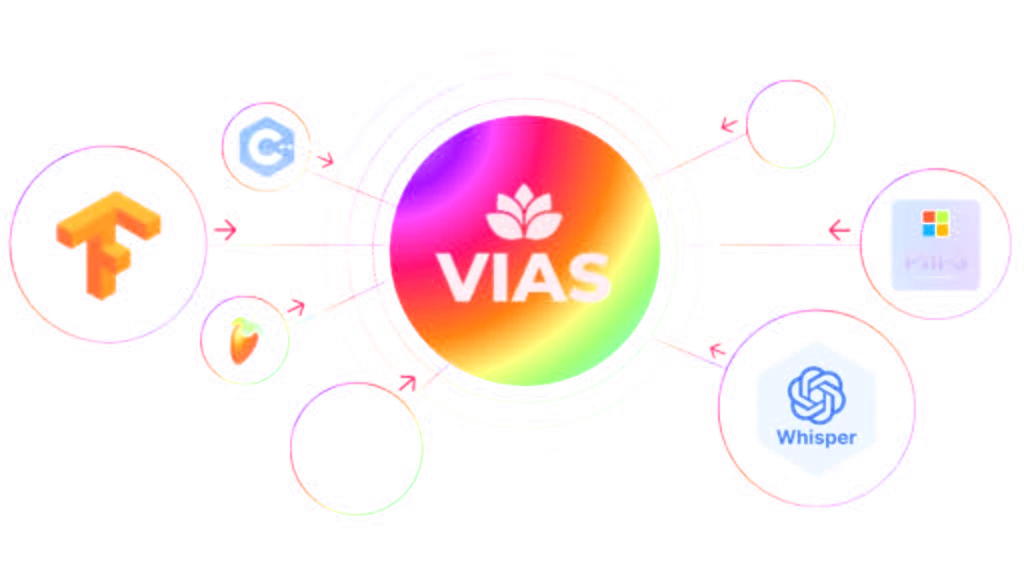
- C++The app, light enough for listening to fit on the phone.
- TensorFlowRuns the model that classifies the audio.
- FL StudioRecords the content used in training.
- AudioSetGoogle Research corpus used to train recognition.
- WhisperTranscribes the critical clip.
- Phi-3Interprets the description of the audio.
- ZenviaCarries the message to the support network.
04 — Impact
From public data to the pitch.
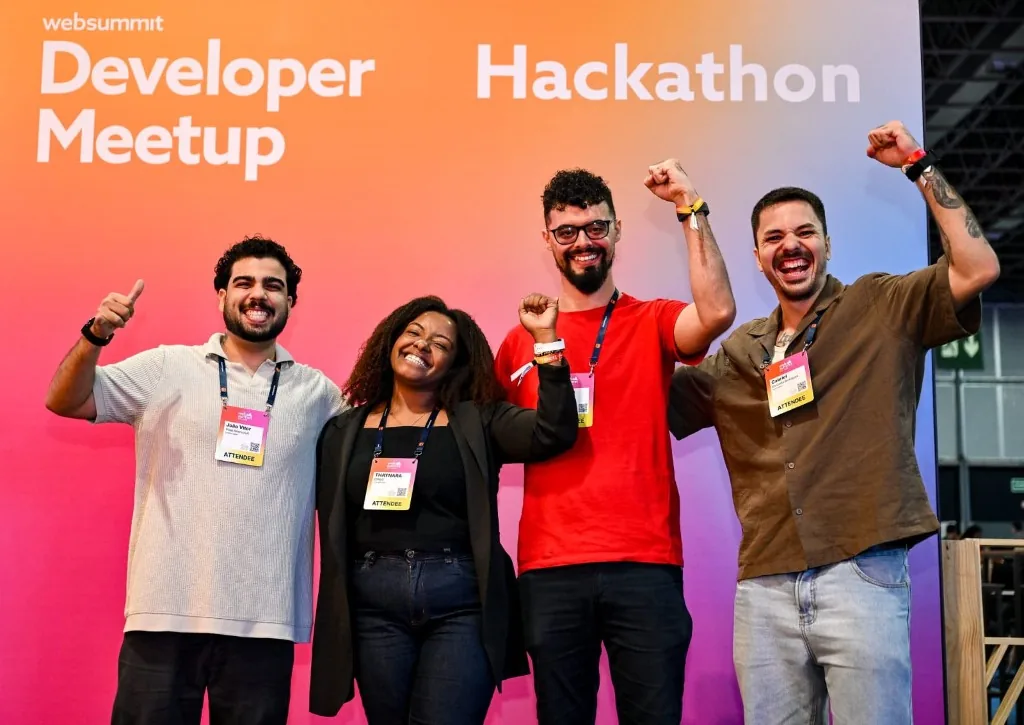
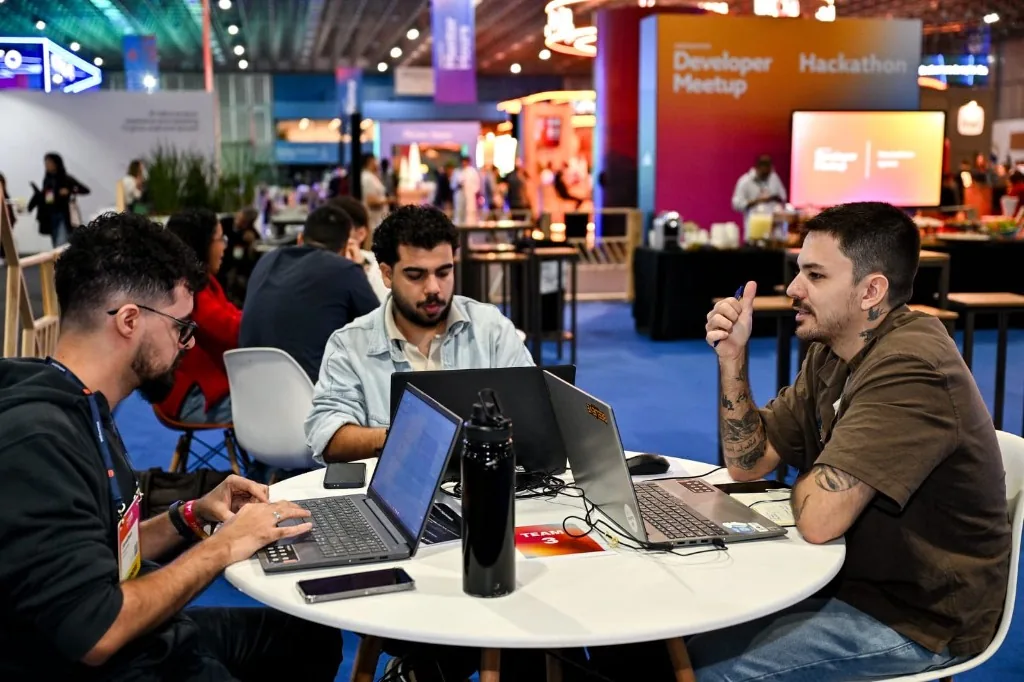
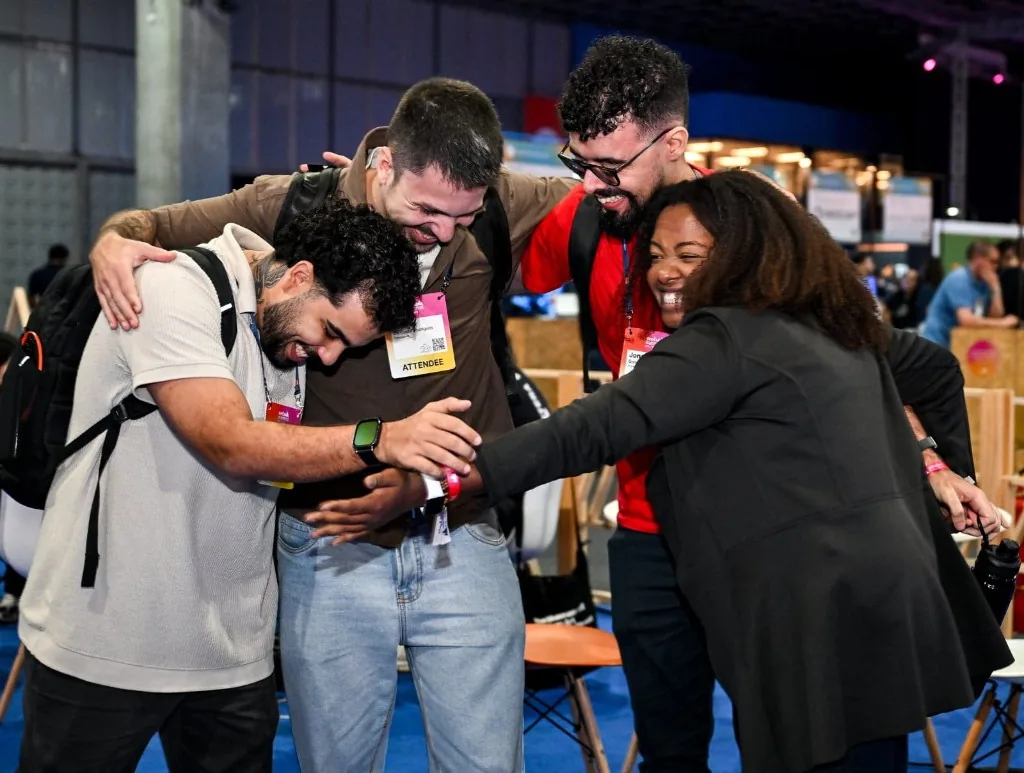
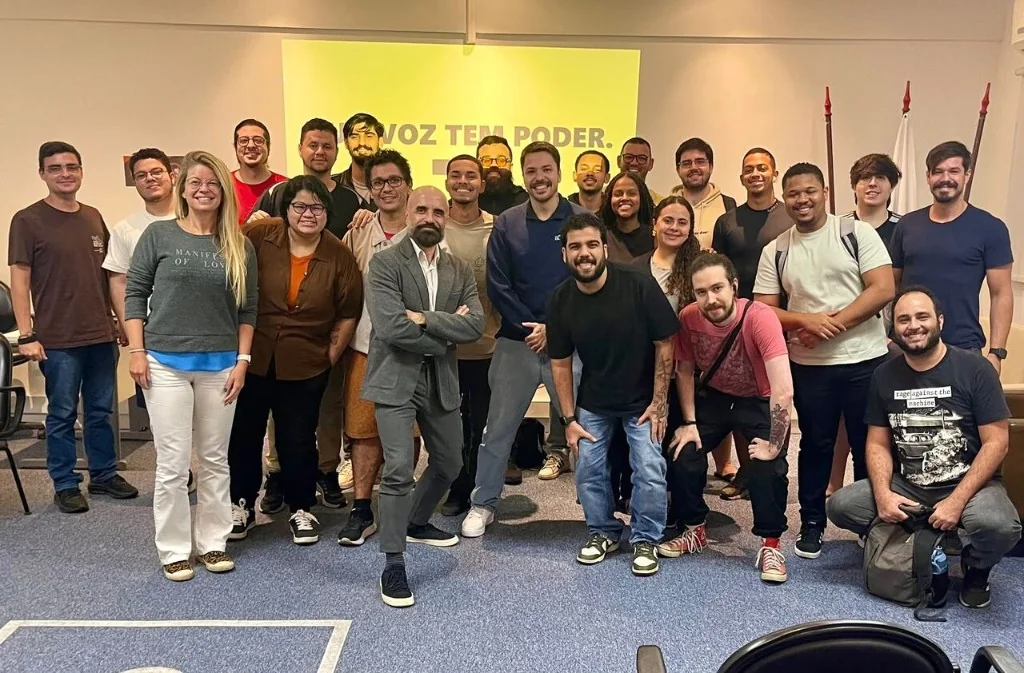
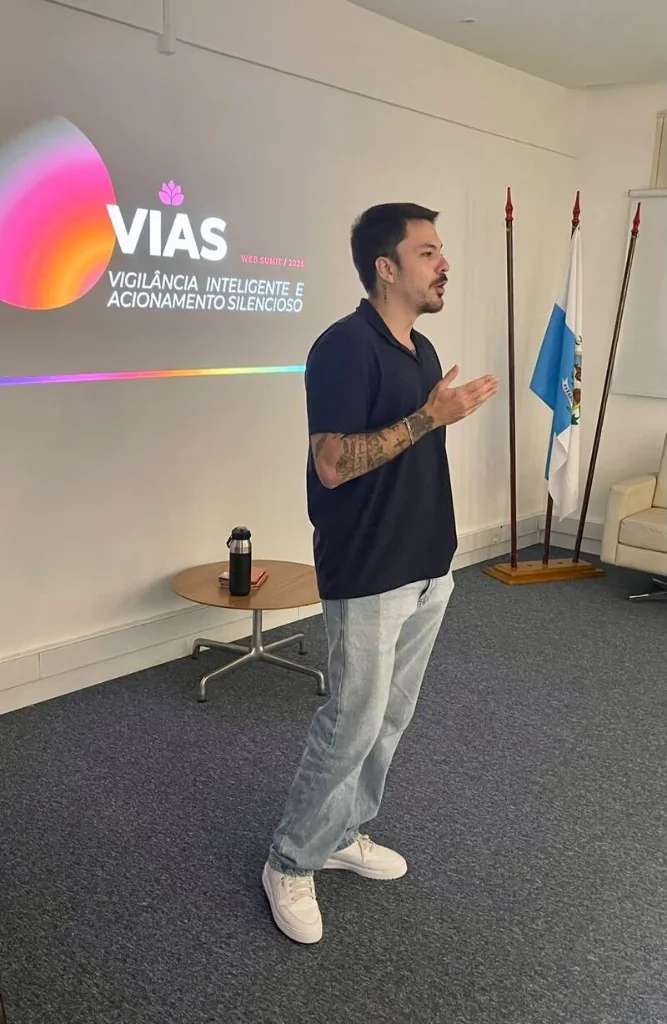
- 1stplace at the Web Summit Rio 2026 Hackathon
- Senac RJa talk on the product after the award